Simple Beginner Breathing Exercises
A quiet pause can start with the breath you already have. Cheryl introduces simple breathing exercises for beginners, with gentle guidance on noticing your natural rhythm and trying belly breathing. Keep each breath comfortable and unforced, treating counting as an optional guide rather than a goal. Start small, without pressure to breathe perfectly.
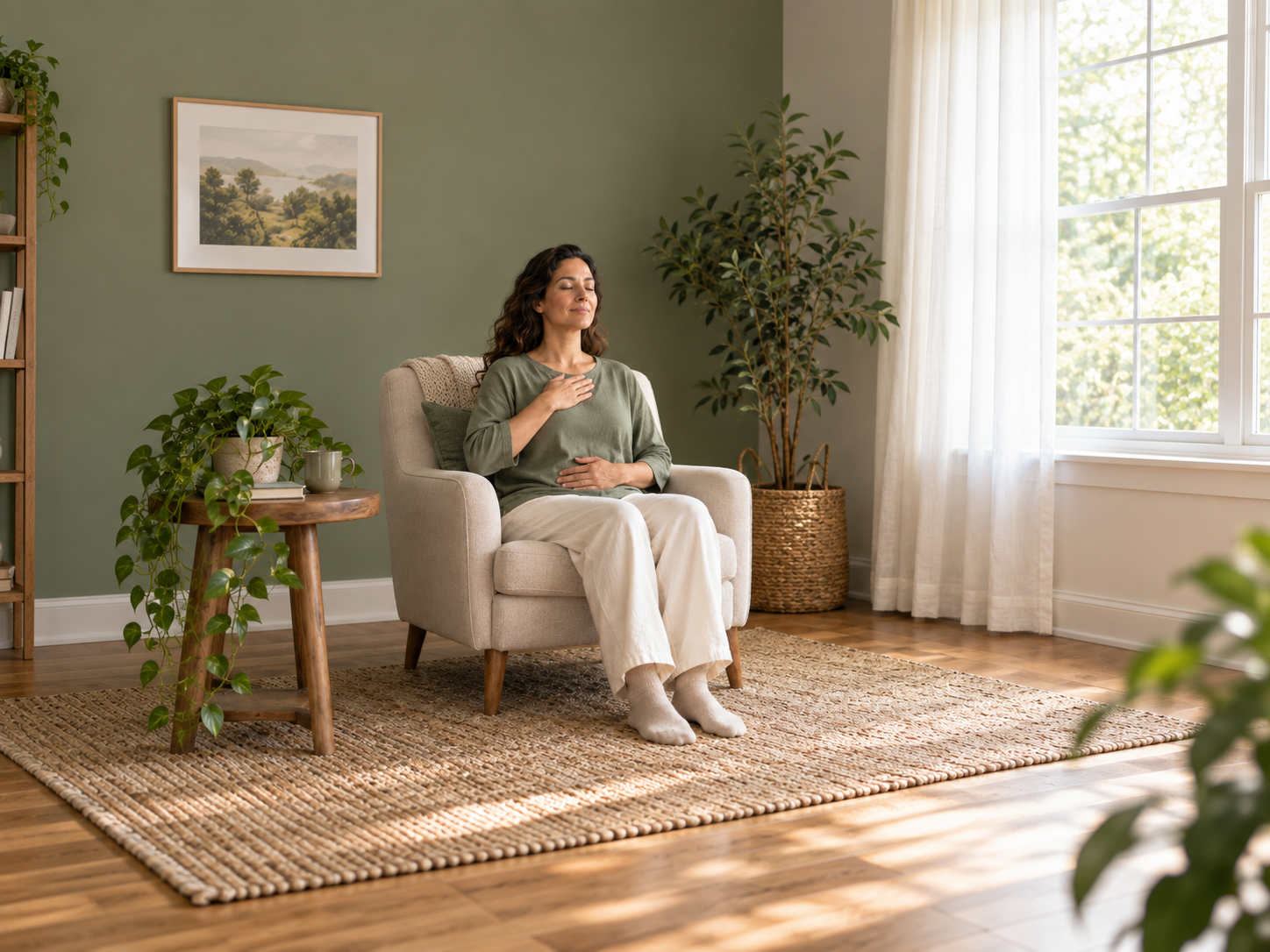
Start With the Breath You Already Have
You may want a calming pause but feel unsure about where to begin. You can use simple breathing exercises for beginners during a busy workday, between tasks, or in a quiet moment at home.
I want you to begin without pressure to perform or change anything perfectly. Sit in a supportive chair with your feet resting comfortably, or lie down if that position feels better.
Let your shoulders drop and soften your jaw. Notice your natural inhale and exhale for several cycles before attempting any particular pattern.
This simple breath focus establishes a foundation of comfortable breathing and relaxation. It can also prepare you to explore belly breathing, box breathing, pursed lip breathing, or alternate nostril breathing later.
Breathwork does not need to be intense or complicated. My approach favors practical, sustainable choices over restrictive plans or harsh routines.
Comfort Comes Before Counting
Breathing should feel easy and unforced. There is no prize for taking the largest breath or holding it the longest.
Treat counting as a mindfulness tool rather than a performance goal. If a count feels strained, shorten it or return to your ordinary breathing rhythm.
Try Gentle Belly Breathing
Belly breathing is another name for diaphragmatic breathing. It helps you notice movement lower in your torso as the diaphragm participates in breathing.
The goal is gentle movement, not pushing your stomach outward or filling your lungs to capacity. According to the American Lung Association, diaphragmatic breathing is one technique people can practice to support more efficient breathing and lung function.
I suggest practicing for one to three minutes at first. Stop while the exercise still feels manageable rather than waiting until you become tired or uncomfortable.
Belly Breathing Steps
- Place one hand on your upper chest and the other below your rib cage, over your belly.
- Breathe in gently through your nose and notice whether your lower hand rises softly.
- Exhale slowly through your nose or mouth without forcing out the air.
- Keep your upper chest, neck, and shoulders as relaxed as possible.
- Repeat at a natural pace for several comfortable cycles.
When to Use It
Try belly breathing before a meeting, after a demanding conversation, or while shifting from work into rest. I see it as a small whole-person wellness habit, not a test of discipline.
Use Box Breathing for a Steady Rhythm
Northwestern Medicine describes box breathing, also called square breathing or 4-4-4-4 breathing, as four parts: inhale, pause, exhale, and pause again. Each part forms one side of an imagined box.
A common beginner pattern is to inhale for four comfortable counts, pause for four, exhale for four, and pause for four. Those counts are optional guideposts, not targets you have to reach.
Use a count of two or three if four feels too long. You can also remove either pause and simply keep the inhale and exhale smooth.
A Flexible Box Breathing Practice
Picture yourself tracing the four sides of a box only if that image helps you stay present. Otherwise, quietly follow the four stages without visualization.
Try two to four relaxed rounds. Return to ordinary breathing between rounds whenever you need a break.
The National Center for Complementary and Integrative Health lists slow, deep breathing among practices that can produce the body’s relaxation response. Your experience can vary, so comfort remains more important than completing a set pattern.
Approach 4-7-8 Breathing With Care
The traditional 4-7-8 breathing sequence involves inhaling gently for four counts, holding for seven, and exhaling slowly for eight. A long breath hold may not suit every person, especially someone new to structured breathing or uneasy with breath retention.
Do not treat this technique as a treatment for anxiety, insomnia, or another health condition. It is simply one breathing pattern you may explore if it feels comfortable.
Whole-person wellness also extends beyond physical practices. My holistic approach considers social, spiritual, intellectual, financial, physical, cultural, and occupational health, so a breathing pause is only one possible part of caring for your overall life.

A Comfortable Alternative Without Holds
Try inhaling for four counts and exhaling for six to eight without holding your breath. A slightly longer exhale may feel more accessible than the full sequence.
Shorten both counts if you feel strained. You can also breathe normally or choose belly breathing instead.
Build a Daily Breathing Practice That Fits Your Life
Choose one technique to explore for a week rather than trying to master every method at once. A focused daily practice makes it easier to notice which rhythm feels comfortable.
Northwestern Medicine’s diaphragmatic breathing guidance suggests practicing for up to five minutes once a day. Connect the practice to something you already do, such as sitting at your desk, making tea, parking your car, or preparing for bed.
The familiar activity becomes a reminder without requiring another complicated schedule. Begin with one to five minutes.
When time and comfort allow, you might try a quiet ten-minute session. I encourage small, repeatable choices because habits need to fit across the whole of life.
Missing a session does not erase your progress, and your next ordinary pause is another opportunity to practice.
A Simple Ten-Minute Pause
Use this flexible structure:
- Spend two minutes noticing your natural breathing without changing it.
- Practice belly breathing or flexible box breathing for five minutes.
- Finish with three minutes of normal breathing.
You can end before the timer finishes. Consistency and comfort matter more than completing all ten minutes.
Common Beginner Mistakes to Avoid
Do not force a deep inhale, raise or tighten your shoulders, or chase a perfect count. Larger breaths and longer holds are not automatically better.
Watch for dizziness, unusual breathlessness, tingling, chest discomfort, or emotional distress. Stop the exercise and return to normal breathing if any of these occur.
A pattern that feels comfortable one day may feel different during illness, fatigue, or stress. Do not assume one method will work the same way for every body or in every situation.
NHS breathing exercise guidance advises letting your breath flow as deep into your belly as is comfortable, without forcing it. That simple principle is more useful than meeting a particular count.
When to Get Medical Guidance
Stop the exercise if you feel dizzy, uncomfortable, or more breathless. Do not push through symptoms to finish a round.
If you have respiratory health, heart health, or other medical concerns, ask a qualified healthcare professional which breathing practices are appropriate for you. Seek prompt medical care for new, severe, or persistent breathing difficulty or chest discomfort.
Choose One Gentle Practice Today
I want you to choose the technique that feels most comfortable and let that be enough. You might begin with one minute of natural breathing, a few rounds of belly breathing, or box breathing with shorter counts.
Notice whether anything changes in your sense of pace, physical tension, or presence. You do not need to produce a particular feeling for the practice to count.
Breathing can be one small part of practical, honest, whole-person care. Cheryl Gladney’s approach also includes a nine-step wellness framework based on her personal reset journey, with self-paced resources designed as accessible next steps.
If you want to look beyond breathing, you can explore Cheryl Gladney’s free Reset Your Health & Wellness Guide. It offers a straightforward way to consider the different areas of wellness that shape your everyday life.