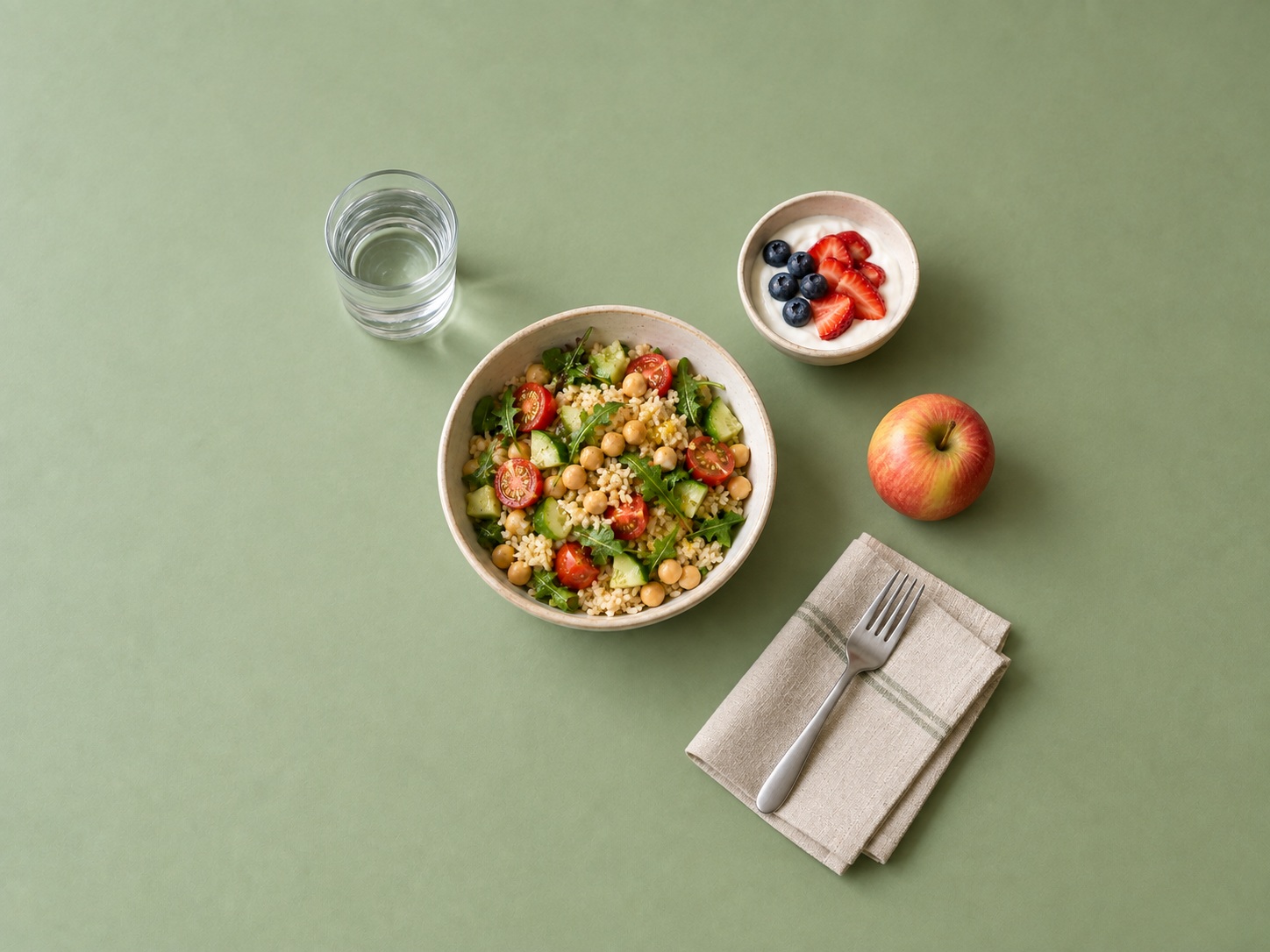
How to build a mindful eating practice at mealtimes
Learn how to practice mindful eating with small, realistic changes that bring more awareness to mealtimes. Cheryl shares a gentle, nonjudgmental approach to putting distractions aside, noticing flavors and textures, and tuning into hunger and fullness cues. Start with one meal and one manageable habit, without rigid food rules or pressure to be perfect.

If you finish lunch while answering emails and realize you barely tasted it, I encourage you to start with awareness, not criticism. My approach to how to practice mindful eating is simple: bring your attention back to one part of the meal at a time. These six steps offer ways to reduce screen time, use mindful breathing, and build a realistic mealtime routine grounded in self-acceptance.
Start with awareness, not perfection
When I talk about mindful eating, I do not mean changing every meal or following rigid food rules. I mean paying purposeful, nonjudgmental attention to eating, including your hunger cues, fullness cues, thoughts, surroundings, and sensory awareness. It is a way to bring mindfulness to an everyday activity, one bite at a time.
I think of present-moment awareness as an invitation to notice food aroma, food texture, food flavor, physical sensations, and emotions without labeling them as right or wrong.
My coaching focuses on whole-person wellness. Stress, routines, culture, relationships, emotions, and access to food all deserve space in the conversation about how you eat, including periods of stress eating.
Choose one meal and one small practice
I encourage you to choose one snack or meal this week rather than trying to remain attentive all day. First, observe where you eat, how quickly you finish, and what competes for your attention.
You might begin by sitting at a table, serving modest portions if that feels right for your needs, or putting your phone away for five minutes. Start with observation, then choose one manageable change. You do not have to change everything at once.
1. Put distractions aside before you eat
My first suggestion is to turn off the television and place your smartphone, tablet, and laptop out of reach before taking the first bite. If you are working, create a short boundary around lunch by closing unnecessary tabs, silencing notifications, and stepping away from your desk when possible.
Give yourself a chance to notice taste, satisfaction, hunger, and fullness. Ask yourself whether you are enjoying the meal or eating automatically while focused elsewhere.
I am not asking you to create perfect silence. A quiet meal is not always realistic, especially with children, colleagues, or travel. The aim is to reduce avoidable distractions.
Make the table your cue to pause
Try serving the portion size you intend to begin with instead of grazing from a bag, container, or desk drawer. You can have more if you remain hungry. This is a starting point, not a limit.
Once seated, take one slow breath before beginning. I suggest this small pause as a way to turn your attention from rushing toward nourishment without making the meal complicated.
2. Slow down and savor each bite
I encourage you to try eating slowly by taking small bites, chewing thoroughly, and creating a brief pause between bites. Putting your utensils down occasionally is another option, not another standard you must meet.
There is no need to count every chew. I want you to notice your experience, not perform the meal according to a strict formula.
As you slow down, give yourself room to notice how your fullness cues change throughout the meal. You do not need to reach a particular feeling or follow a timer. Simply check in with your body.
Use a simple mid-meal pause
Halfway through the meal, I invite you to ask, “What does this taste like now?” and “How does my body feel?” Continue eating if you are hungry, without treating the pause as a test.
My holistic approach addresses social, spiritual, intellectual, financial, physical, cultural, and occupational health. Your schedule, budget, workplace, traditions, and relationships matter here, too. Choose a mindful pause that fits your life.
3. Engage your senses
Before and during the meal, bring your attention to food color, aroma, texture, flavor, temperature, and sound. You might notice the deep green of a vegetable, its crunch as you take a bite, the warmth of soup, or the aroma of coffee before tasting it.
I invite you to explore whether sensory attention changes your enjoyment of an ordinary meal. This is not about crash diets or punishing routines. It is about paying attention to the food in front of you, without turning the meal into another set of rules.
You do not need to analyze every sensation. My suggestion is to select one sense whenever your attention wanders, then gently return to the meal.
Try the first-bite exercise
Look at the first bite and notice its smell before placing it in your mouth. Observe its texture, temperature, and flavor before swallowing, without rushing to take the next bite.
You can try this self-paced exercise with a packed lunch, a restaurant meal, a snack, or a family dinner. It reflects the kind of guidance I aim to offer: practical, honest, accessible, and focused on the whole person.
4. Check in with hunger, fullness, and triggers
I encourage you to check in before, during, and after eating to notice physical hunger, satisfaction, and fullness. Approach your signals with curiosity rather than pressure to identify them perfectly or stop at a prescribed point.
Eating is not always prompted by physical hunger. Stress, comfort, convenience, boredom eating, and habit eating may also bring you to food. My invitation is to notice those influences without making them another reason to judge yourself.
Ask three gentle questions
Before eating, ask, “What am I feeling in my body, and what do I need right now?” During the meal, ask, “Am I still enjoying the food, and am I becoming comfortably satisfied?”
Afterward, ask, “What did I notice about this experience?” I want you to treat the answer as information for future meals, not a grade.
Respond without judgment
I encourage you to avoid labeling foods, appetite, or emotional eating as good or bad. Let nonjudgment guide your reflection: what was happening, what did you need, and what might support you next time?
If eating regularly feels distressing, out of control, or connected with binge eating, I encourage you to seek support from a qualified healthcare professional or registered dietitian. Coaching is not a substitute for medical or eating-disorder care.
5. Practice gratitude and respect for food
Take a quiet moment to appreciate the meal, the people who grew or prepared it, or the time you have set aside to nourish yourself. I do not mean that gratitude needs to be formal, spoken aloud, or attached to a particular belief.
Leave room for culture and memory, too. A familiar recipe may connect you with family, community, place, or an important period in your life.
To me, respect for food also includes respecting your own needs. You can appreciate a meal while deciding that you want more, have had enough, or do not enjoy a particular item.
Use a grounding thought
I suggest a brief prompt such as, “This meal is here to support me.” One sincere thought is enough.
My nine-step wellness framework grew out of my personal reset journey. It reflects a belief that guides my coaching: wellness is a daily practice, not a performance. Food matters, but it exists alongside the health of your body, mind, relationships, work, culture, and spirit.
6. Build a practice that works in real life
I want this practice to fit the life you actually have. Rushed mornings, working lunches, family conversations, travel, and meals eaten on the go are reasons to adapt, not reasons to give up.
Try habit stacking by attaching one mindful action to something you already do. Take one breath before your coffee, spend the first five minutes of lunch without a screen, or check your hunger before opening an afternoon snack.
When you forget, return at the next bite or meal. I encourage you to practice those small returns rather than wait for a flawless day.
Common mistakes to avoid
I do not want mindful eating to become calorie tracking, rigid portion control, or another reason to criticize yourself. You do not need to force distraction-free eating at every meal, either.
Some meals will be fast, social, noisy, or interrupted. Give yourself room to return to attention without needing complete control over your environment.
Key takeaway
My message is simple: mindful eating is not about eating perfectly. It is about noticing more and judging less.
At your next meal, choose one action: put the phone away, take a breath, or notice the first bite. Repeat that practice until it feels natural, then add another. Start where you are.
If you would like a starting point beyond mealtimes, my free Reset Your Health & Wellness Guide introduces my nine-step framework. Like my other self-paced resources, it gives you an accessible next step to explore on your own schedule, with practical guidance for the whole you.